
Navigating Euro-Zone Clearing: A Merchant’s Rights Against Illegal IBAN Discrimination
The international financial system in 2026 operates under a strict regime of operational resilience and institutional accountability. For corporations managing high-volume operations in specialized verticals, maintaining open, predictable access to traditional payment clearing networks has become a primary business challenge. This issue is particularly acute for Contract for Difference (CFD) brokers, Crypto-Asset Service Providers (VASPs), and high-turnover Adult or Dating platforms.
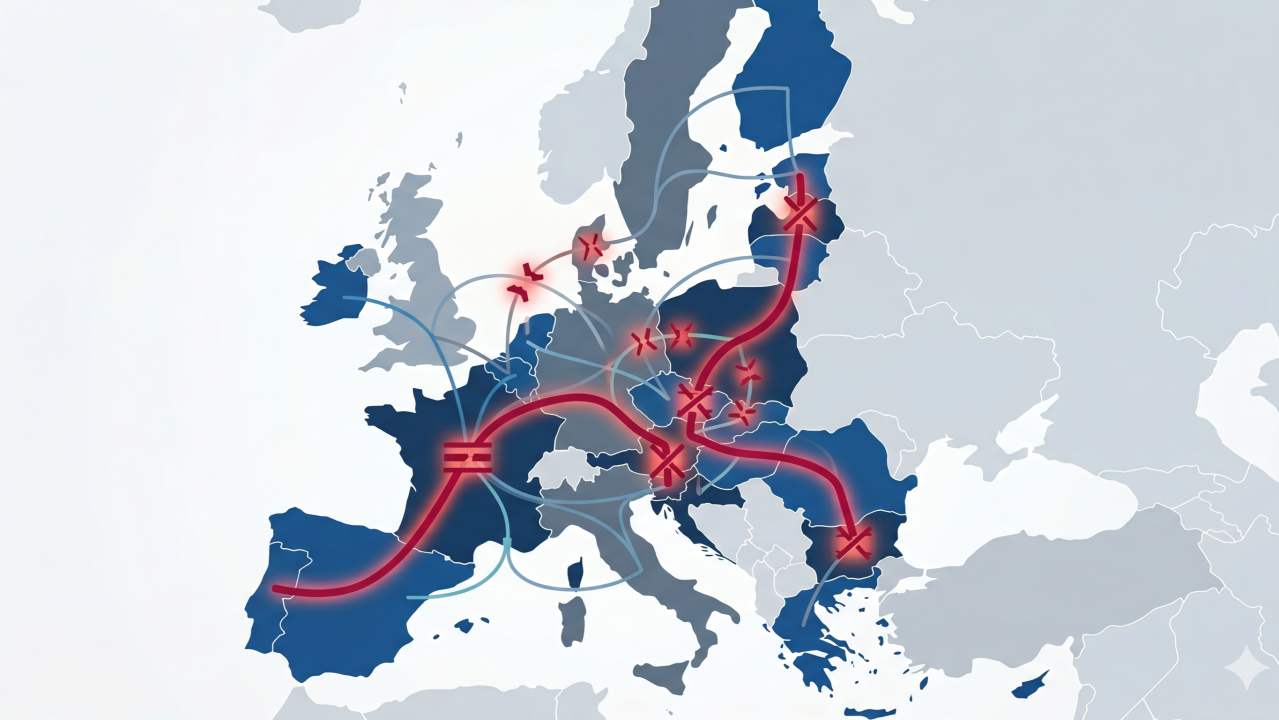
This operational friction frequently manifests as IBAN discrimination. This is an unlawful practice where commercial banks inside the Euro-zone refuse to clear, process, or accept transactions originating from valid Single Euro Payments Area (SEPA) accounts based purely on the country of origin or the underlying high-risk classification of the merchant. For international business leaders, protecting corporate treasury requires a clear understanding of your statutory clearing rights, the technical rules governing modern payment data, and the deployment of alternative cross-border banking pathways.
The Legal Framework of SEPA Access vs. Regulatory Panic
The statutory baseline for European payment integration is unambiguous. Under Article 9 of the SEPA Regulation, financial institutions are legally prohibited from dictating where a counterparty must maintain their bank account within the SEPA zone. A bank cannot refuse to process a wire transfer or direct debit simply because the sovereign jurisdiction of the sender’s IBAN differs from that of the receiver. Within the European clearing network, a cross-border SEPA transaction must be treated exactly like a domestic one.
Despite these clear legal protections, many tier-1 commercial networks inside the European Union are actively violating the regulation. Guidance provided by the European Commission on SEPA outlines the obligations of these networks, yet compliance gaps remain. Faced with an accumulation of structural deadlines throughout 2026, compliance departments are implementing sweeping, automated account blocks out of institutional risk aversion. This systemic rejection behavior is driven by three major regulatory catalysts:
- The MiCA Framework Enforcement: Following the expiration of the transitional period on July 1, 2026, any Crypto-Asset Service Provider (CASP) marketing to European clients without a finalized MiCA license must execute a mandatory operational wind-down plan[. Terrified of secondary liability, traditional retail networks are pre-emptively terminating payment channels for any firm interacting with digital assets.
- The AMLD6 Transparency Mandate: Effective July 10, 2026, the Sixth Anti-Money Laundering Directive introduces aggressive, centralized disclosure requirements for Ultimate Beneficial Ownership (UBO) registers across all Member States. Rather than committing manual compliance hours to auditing complex, multi-jurisdictional corporate structures, legacy banks are systematically offboarding clients with foreign ownership profiles.
- Card Scheme Financial Adjustments: In April 2026, Visa permanently lowered its Account Attack Intelligence (VAMP) threshold to 1.5%. Simultaneously, Mastercard implemented a fivefold increase in its excessive authorization fee structure, charging clearing systems a strict $0.50 fee for every automated payment retry. To protect their own margins, clearing banks are offboarding high-risk merchants whose processing engines generate significant system noise.
When these rejections happen unlawfully, corporate entities have the right to file formal complaints. The European Commission IBAN Discrimination Portal handles direct escalations, while regional oversight bodies (such as the French DGCCRF, Banco de España, and the Danish Financial Supervisory Authority) are authorized to penalize non-compliant domestic commercial banks.
Unmasking the High-Risk Verticals: Where Rejections Occur
To defeat clearing discrimination, it is necessary to examine how specific business sectors are targeted by automated compliance filters and how those filters can be bypassed.
1. Contract for Difference (CFD) Brokers
CFD brokers manage massive volumes of daily cross-border client deposits and withdrawals. Because their operations often utilize localized corporate hubs while tapping into secondary liquidity providers globally, legacy banks flag their rapid transaction velocities as suspicious. When an EU bank blocks an incoming transfer from a regulated broker, they routinely cite general internal risk policies, directly violating Article 9. Brokers require sophisticated redundancy to prevent localized bank actions from freezing global client trading operations.
2. Crypto-Asset Service Providers (VASPs)
Traditional banking committees rarely understand protocol-level risk. When a VASP attempts to establish a fiat off-ramp to pay operational expenses or distribute mining and staking rewards, traditional banks struggle to evaluate the underlying technical infrastructure. Lacking the tools to audit Proof-of-Stake mechanics, slashing protection rules, or validate institutional custody setups, commercial banks issue blanket account rejections, ignoring the fact that the entity may hold valid regional registrations.
3. Adult and Dating Platforms
Merchants in the digital entertainment space face aggressive Merchant Category Code (MCC) restrictions and scheme blacklists. Because these platforms process micro-transactions from a global consumer base, they are highly exposed to chargebacks and payment retry penalties. Traditional banks review these automated card metrics and use them as a pretext to restrict or freeze the platform’s primary corporate clearing accounts.
Technical Core: Why Payments Fail Behind the Scenes
In many instances, what appears to a merchant to be deliberate, discriminatory bias from a bank is actually a silent technical failure generated by mismatched processing infrastructure. To maintain continuous connectivity to European clearing rails, corporate treasurers must align their payment data with strict 2026 network updates. Guidance from the European Central Bank SEPA Framework emphasizes data uniformity as a requirement for core access.
ISO 20022 and Data Structuring
As of November 14, 2026, the transition to the ISO 20022 messaging standard becomes absolute for all international payment routing. Under these updated rules, any payment message that transmits counterparty address data in an unstructured format will be automatically rejected and turned away by global clearing engines.
Legacy text fields are no longer permitted. Corporate groups must immediately implement structured address ERP compliance for ISO 20022 after November 2026. Detailed guidelines on payload construction can be cross-referenced via the official European Payments Council SEPA Rulebooks. If your enterprise software cannot break down city, street, and country data into separated, XML-compliant data tags, your payments will fail automatically, irrespective of your legal rights.
Acquiring Infrastructure Transparency
High-risk merchants frequently rely on aggregated, blended payment processing rates to manage credit card volume. Blended pricing bundles card network fees, interchange costs, and processor margins into a single percentage. While simple, this pricing model masks transactional data, preventing a bank’s risk committee from accurately identifying the root cause of your transaction retries.
Transitioning your platform to an unbundled Interchange-Plus-Plus (IC++) vs blended pricing for Adult platforms model gives compliance teams itemized data transparency. This level of data-driven clarity isolates high-risk transaction noise and proves to clearing networks that your core business model is entirely clean.
The Swiss-EU Cross-Border Clearing Corridor
When commercial banks within the Euro-zone enforce non-compliant restrictions on corporate accounts, merchants must establish structural redundancy outside the immediate geographic boundaries of the EU. According to analysis found within the European Parliament Briefing on IBAN Discrimination, cross-border bottlenecks require alternative routing. The Swiss financial infrastructure provides a direct, highly stable corridor into SEPA clearing systems without inheriting the regulatory panic impacting European retail banks.
By routing transactional flows through an independent advisory framework registered under the revised Swiss Anti-Money Laundering Act (nAMLA), a merchant establishes verified institutional accountability. This professional framework allows qualified market participants to construct durable, bankable CFD structures for Swiss Banking access 2026.
Within this optimized architecture, specialized networks such as Bivial AG, a FINMA-regulated Swiss institution, provide dedicated Swiss IBAN allocations, programmatic bulk transfers, and advanced API-driven corporate banking services. Because Bivial operates with total independence from the commercial retail market, client risk profiles are assessed through individualized due diligence rather than through arbitrary, automated geographic filters.
The Banking Architect Framework: A Practical Solution
Overcoming illegal clearing restrictions requires moving away from reactive bank account acquisition. Instead, merchants must deploy a structured blueprint designed to identify and eliminate toxic nodes within their corporate footprint before submitting a single onboarding document.
The 6-step Banking Architect Framework treats payment infrastructure as a strict engineering discipline:
- Strategic Triage: A rigorous audit of your existing payment service providers (PSPs), technology partners, and corporate intermediaries to isolate hidden ownership risks or unlicensed nodes.
- Implementation Advisory: Overhauling internal anti-money laundering (AML) manuals, know-your-customer (KYC) dossiers, and automated content moderation rules to ensure they align perfectly with 2026 institutional expectations.
- Ecosystem Mapping: Documenting and mapping every liquidity provider, market maker, and operational counterparty your business uses to guarantee absolute supply-chain transparency.
- The Proxy Whitelist Probe: Running your partners’ corporate data through an established network of licensed referral nodes to pre-validate whether a tier-1 bank will accept the connection before processing capital.
- Acquiring Mediation: Removing flagged or under-regulated payment nodes and replacing them with fully licensed, transparent card processors optimized for your specific industry sector.
- Final Submission: Presenting a pre-qualified, watertight application dossier to the clearing institution, resulting in fast onboarding with minimal friction.
An Operational Scenario
Consider a regulated CFD broker that experienced a sudden, automated SEPA clearing block from a legacy European bank. By deploying the Proxy Whitelist Probe, the broker discovered that a secondary, offshore payment processor used for minor regional volume had been silently blacklisted by major card schemes.
The legacy bank’s automated filters flagged the link and blocked all incoming client wires. By using the framework, the broker immediately severed ties with the toxic processor, replaced it with a verified partner from the Swiss network, and presented a clean, restructured dossier to a tier-1 Swiss institution. Clearing access was restored within days.
The Operational Reality: Banks rarely refuse high-risk merchants because of the business sector itself. They reject them because the operational risk is poorly presented and poorly documented. If a top institution like Bivial will not touch your commercial partners, neither should you.
Institutional Frameworks Compared
| Operational Risk Vector | Legacy Bank Treatment | Structured Architecture Approach |
|---|---|---|
| Complex, Multi-Tier UBO Setup | Automated account termination based on country risk filters. | Comprehensive corporate tracing matched with an institutional-grade Documented Rationale. |
| Elevated Transaction Retry Ratios | Account throttling, financial fines, and sudden clearing restrictions. | Migration to unbundled IC++ pricing and algorithmic routing optimization. |
| Data Transmission Profiles | Automated global transaction drops due to unstructured data formatting. | Enforcement of structured address ERP compliance under modern ISO 20022 rules. |
Conclusion
Compliance within the modern euro clearing zone is an active commercial asset rather than an administrative hurdle. While illegal IBAN discrimination remains a real threat for specialized market participants, international merchants can completely neutralize this friction by treating their corporate payment stack as an architectural discipline. By anchoring your operations within the Swiss-EU clearing corridor, maintaining strict data conformity with modern ISO standards, and conducting rigorous supply chain due diligence, you can ensure your business remains permanently connected to global capital corridors.