
Cyprus Tax Restructuring – Mitigating European Compliance Friction for Digital Asset Groups
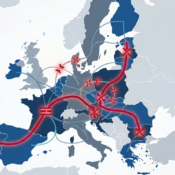
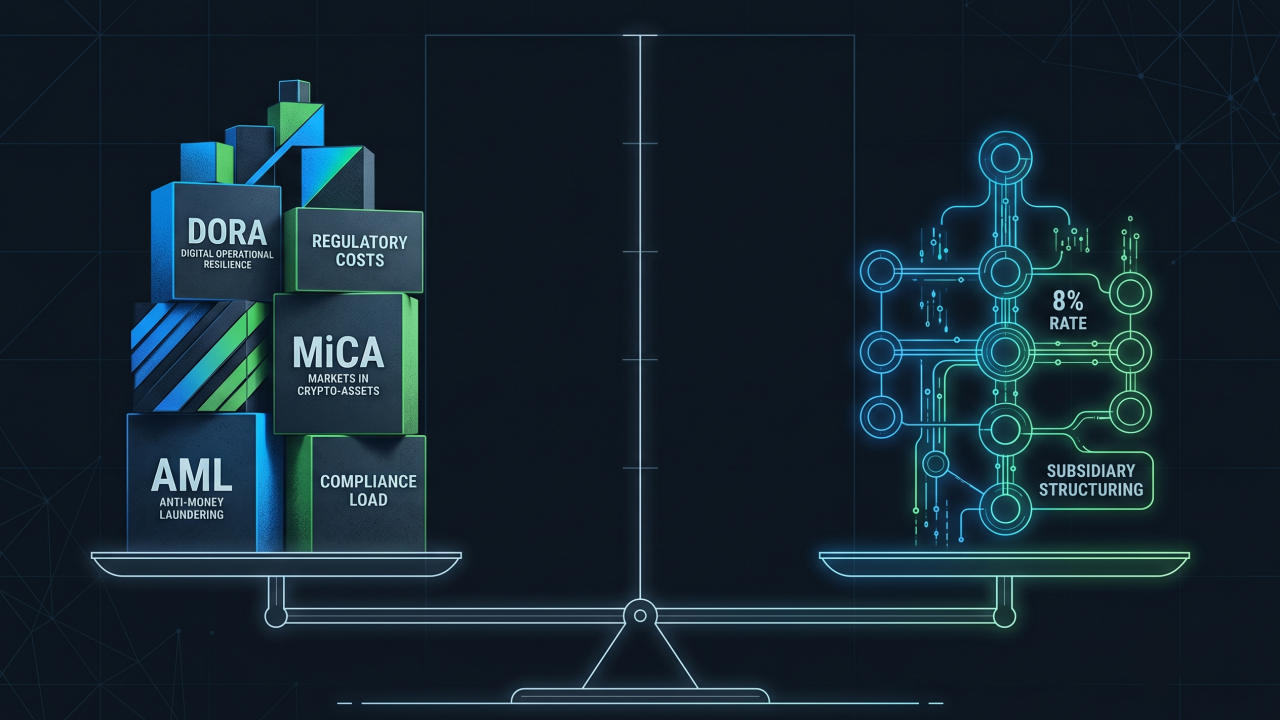
Compliance costs are rising rapidly across the European Union in 2026. As financial groups adapt to the end of the MiCA transition period and the absolute enforcement of DORA, operations teams must absorb millions of euros in recurring administrative expenses. Smart operators are reorganizing their corporate structures to utilize the newly enacted tax reforms in Cyprus as a direct offset for these heavy compliance outlays.
- Primary Market Trigger: Cyprus Article 20E flat tax and standard corporate rate adjustment to 15%
- Systemic Impact: Mandatory annual compliance overhead exceeding two million euros for active platforms
- Operational Requirement: Verified corporate substance featuring local office leasing and registered payroll
Cyprus Substance – The Real Cost of Local Payroll
Postbox companies are dead. Independent bank compliance teams now look directly at raw transaction data and physical utility bills rather than relying on paper registry certificates from Nicosia. The network tracks everything. If your company registers a nominee director but fails to demonstrate actual operational control or real local headcount, automated transaction screening tools will instantly flag the entity as a shell and block your correspondent routing. Data is the ultimate truth.
Substance requires real capital. To establish a compliant setup in Cyprus, a corporate manager must hire local employees and pay the mandatory contributions required by the state. The math is clear. With the statutory minimum wage set at 979 euros gross for the first six months and rising to 1,088 euros gross after continuous service, a team of two experienced administrative clerks requires an employer to pay approximately 30,000 euros annually when including social insurance and national healthcare costs. Local payroll is the entry fee.
Why Standalone Tax Optimization Fails
Risk committees see everything. During my time operating within a FINMA-regulated institution, we regularly rejected applicants who presented isolated tax structures without any operational link to their active trading hubs. Standalone structures represent danger. When a parent company in Germany or the United Kingdom attempts to book trading gains in Cyprus through a silent subsidiary, tax auditors and correspondent networks flag the lack of real management decisions as immediate tax evasion. Group alignment is mandatory.
Honestly, many founders are frustrated. Obviously, they choose superficial administrative shortcuts because they want to bypass the friction of establishing local office spaces and hiring foreign personnel. We understand the pressure. However, bank risk committees are deeply concerned about the rising penalties for facilitating unhedged tax evasion and will freeze corporate funds without warning if the group architecture lacks technical substance. Paper agreements do not stop closures.
The Insider View: “Part of me understands why founders take shortcuts to save time, but the part that has seen the operational fallout says wait. If a top-tier bank like Bivial will not accept your network transparency, your business should not risk working with them either.”
Aligning Corporate Architecture with nAMLA Standards
File management demands discipline. Under the strict guidelines of the revised Swiss Anti-Money Laundering Act, known as nAMLA, corporate advisors must enforce rigorous structural standards across all subsidiary documentation. Regulatory standards are absolute. Every single corporate file must feature precise titles, sequential page numbers, unique revision codes, and verified execution dates to withstand the scrutiny of automated sovereign audits. Administrative shortcuts are red flags.
Transfer pricing requires alignment. Corporate groups must document how their local Cyprus managers perform genuine decision-making roles, govern capital allocations, and manage operational risks. Transactions must tell a story. If your local board minutes do not explicitly justify why the Cyprus entity retains eighty percent of its trading gains, foreign tax authorities will disregard the local residency and tax the profits at your domestic rate. Substance protects your corporate tax rate.
Infrastructure Management
Stable banking access requires verified corporate substance and rigorous local management. Nominee director services under frameworks like the UK Companies Act 2006 must be strictly capped at a maximum of ten firms to ensure total oversight. This operational limit guarantees that the registered director can actively monitor corporate transactions and maintain legal compliance. There are no shortcuts to long-term bankability in 2026.
Sources
- Savva and Associates, economic substance requirements in Cyprus, https://www.savvacyprus.com/economic-substance-requirements-cyprus/
- Enalian Consulting, hiring employees in Cyprus, https://enalian.com.cy/hiring-employees-in-cyprus-to-meet-economic-substance-rules/
- Punin Group, minimum wage in Cyprus, https://puningroup.com/blog/minimum-wage-in-cyprus/
- Nikita Partners, Cyprus tax residency and sixty-day rule, https://nikitapartners.com.cy/cyprus-tax-residency-60-day-rule/
- Setup Cyprus, company formation cost, https://setupcyprus.com/en/cyprus-company-formation-cost/
- Koufettas Law, company formation cost five-year breakdown, https://koufettaslaw.com/cyprus-company-formation-cost-5-year-breakdown/